













Coming up early in March is the French National Contest, where students can put their language skills to the test in competition with French high school scholars across the country.
Contending students get to have first lunch and skip their 3rd block on Tuesday, March 3rd, to complete the test. Lasting 60 minutes with between 60 and 70 questions, Francophones are tested on vocabulary, grammar, listening, and reading comprehension at any level offered by the high school.
Madame Stringer, French teacher and distributor of the test, says “There are two to three sections that have passages on listening comprehension, then there are about two sections of grammar, and then there are three reading sections.”
To study, things like listening to French podcasts, listening to French music, watching movies in French with English or French subtitles, Duolingo or other French games, and especially reviewing the old study guides and quizlets from class are highly recommended.
When picking a podcast to listen to, it is important to find one that is speaking explicitly to students to better match the level one is at. Podcasts like Easy French, Coffee Break French, and Français Authentique are great for learning while doing chores or other things that don’t require constant focus.
Also for listening, is French music. This may not be as good as a study tool as singers tend to slur words sometimes, but it is good for picking out indicator words and vocabulary recognition. Some good French artists are Satine, Bianca Costa, St Graal, Vendredi Sur Mer, and of course Céline Dion. Although this is a fun way of learning, it is not something that should be the only mode of studying and learning the language.
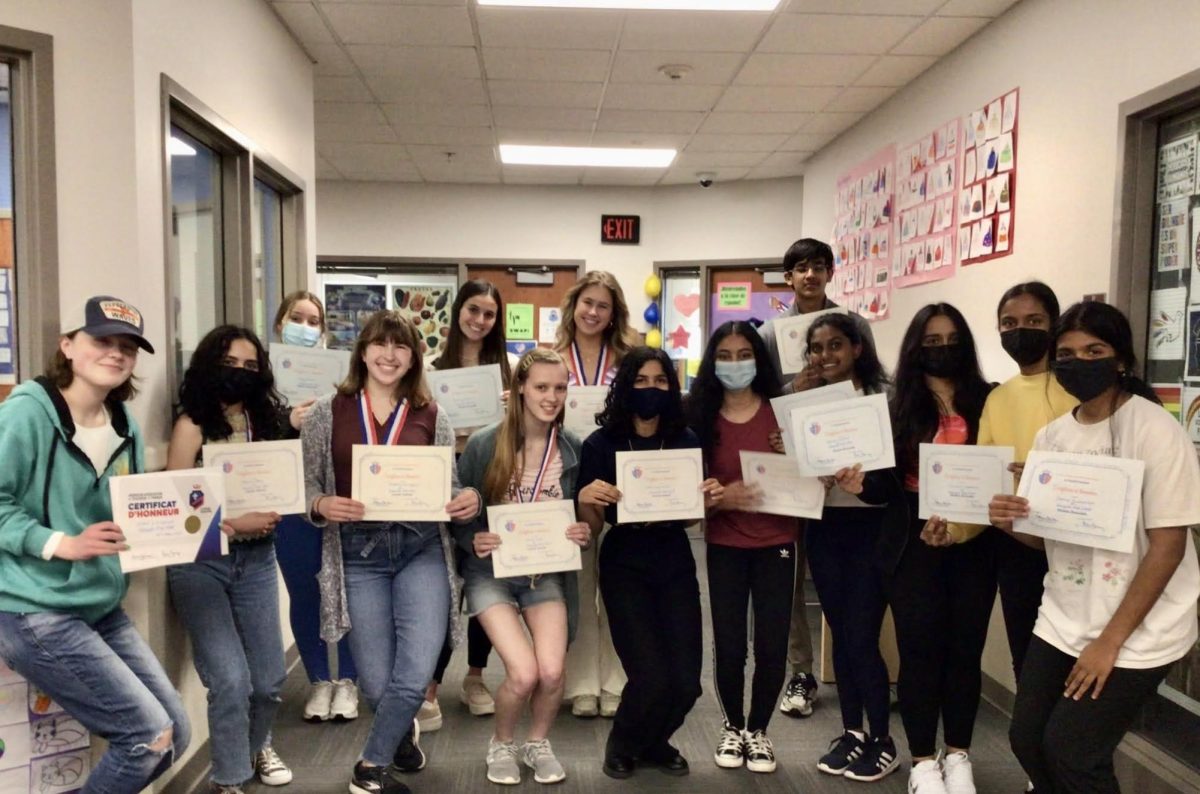
Scores are released by the end of April, and those who get a 80% or higher will be recognized at WHS for performance. “It’s not if you get first in the nation that you are the only one. It is a ranking, so they will say if you reach a certain score, then you and all the other people got first place,” Madame Stringer notes.
There are bronze, silver, gold, and platinum medals given out to the winners of the contest. Sometimes plaques are also given out, but every participant is guaranteed to get a certificate of completion, no matter how they perform.
In addition, students will be nationally ranked, and medalists will be invited to the Minnesota Grand Concours Awards Ceremony on May 11th, providing prizes and a continental French breakfast. In the drawing for prizes, levels three, four, and five qualify for the largest prize: money for a trip or to go to the Concordia Language Villages.
“If anybody is wanting to take an advanced or a national type test like the ACT, it’s good practice for that,” Madame Stringer reflects. “If anybody is curious and wants to know how well they would rank with others in the state of Minnesota and also nationwide, it provides that information.”
This test is great for language learners of French who want to test their skill and show that they have initiative and do things like clubs and activities outside of school.