





















It comes as a surprise to no one that some of our biggest discourses as a school surround the quality of our food. Since the dawn of the school system, students have loudly been voicing their opinions about the qualities of school lunches or the vending machines’ incompetency when it comes to dispensing food, but what about water?
Our bodies are made up of 70% percent water (unless you’re built different like that), so it’s not at all shocking that we need it to live. Medical professionals recommend drinking eight cups of water per day, but many of us still try to last as long as we can without it, or at least until the headaches set in. Luckily, our school provides students with free to use water fountains around the building, not hydrating our students, but improving their overall health and performance.
Or are they?
Although they aren’t directly related to the standard lunchroom discourse I hear daily from others, the water fountains and drinking fountains are nowhere safe from criticism, dare I say even more susceptible. If humans are relying on water as a basic component for life, the water should still be safe, clean, and most importantly, taste good. However, from some of the recent stories I’ve heard from student interviews, our school’s water seems to be none of those things.
While the school provides free water fountains to encourage hydration, the student body remains largely unimpressed. The general consensus is that the water is dubious at best, with sophomore Ava K. bluntly stating it simply “tastes bad.” While some students, like Jake M. and Jake L., find the fountains “readily available” and “convenient,” that convenience is often overshadowed by hygiene concerns. Zuzu, a senior, described the habit of some students putting their mouths directly on the spout as “the most disgusting thing ever,” a sentiment that turns an essential resource into a source of “gross” anxiety for many.
The experience of the school’s water varies from wing to wing, but rarely for the better. Nicole O. famously summarized the flavor as a mix of “iron and sadness,” while others struggled to define the specific unpleasantness. According to junior Lilly S., the school’s plumbing offers a tour of stagnant environments: the A-wing tastes like “lake water,” the C-wing like “metal,” and the gym area like “flat-out pool water.” This inconsistency suggests that the age and location of the pipes play a major role in the quality of what students are expected to drink.
The physical condition of the fountains has become a genuine point of concern for students. Ruby R. noted that older models seem to lack updated filtration systems, often leading to a buildup of “green stuff” that Lilly S. suspects is a mix of algae and mold fueled by saliva. Even the newer bottle-filling stations aren’t exempt from scrutiny. Jemma S. admitted that seeing the “red light” on a filter makes her wary of drinking at all, a sentiment echoed by Ruby R., who has actually been late to class because she refuses to use a fountain with an expired filter. This lack of maintenance, combined with what Lilly S. describes as “dangerously low water pressure” on the upper floors, forces students into a lose-lose situation: risk touching a “gross” spout to get a sip, or go without hydration entirely.
However, out of all of these stories, two specific students’ claims stood out the most. Lilly S, a junior who has been mentioned previously, and Max H, who is also a junior, have very strong opinions about the fountains at school.
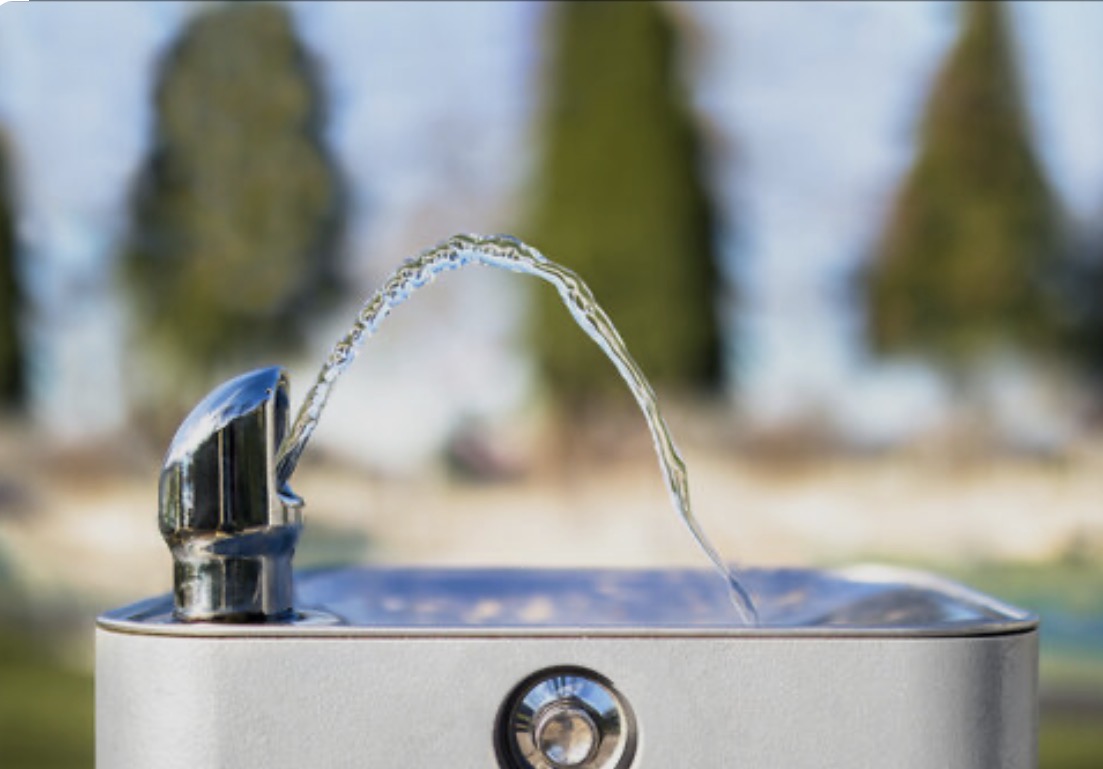
”I would like to file a complaint about the third floor and fourth floor drinking fountains; specifically the ones in A wing and C wing. The drinking fountain streams go approximately one inch above the (spout), so I can’t really drink water without almost touching my lips to the metal; I end up drinking from the water bottle filler upper. I would like a bit more water pressure; specifically in floors three and four.”
As mentioned previously, one of the reasons our fountains are considered so unsanitary is because students have to touch their lips to the dispensers. Unfortunately, one of the reasons this happens is because it’s simply a needed action to get water in the first place. Lilly S has more to say about the dangers of getting sick.
”It feels really unfiltered; I’ve actually gotten sick from the water. We should be keeping them clean, because I’ve been looking at them and they look super gross. I do not drink any school water throughout the day.”
All in all, I’d say I’m shocked. For a district with this many students and staff, I expected the water to be much higher quality than it is. Considering it’s a basic human need like food and air, it’s concerning how many students refuse to drink it, and even more concerning that students who do have the risk of getting sick. While I understand that the school has many projects and factors to look after, especially considering how big of a building this is, I, along with many other students, are wishing that one day our water access is not just one small drop in the bucket of our school’s priorities.