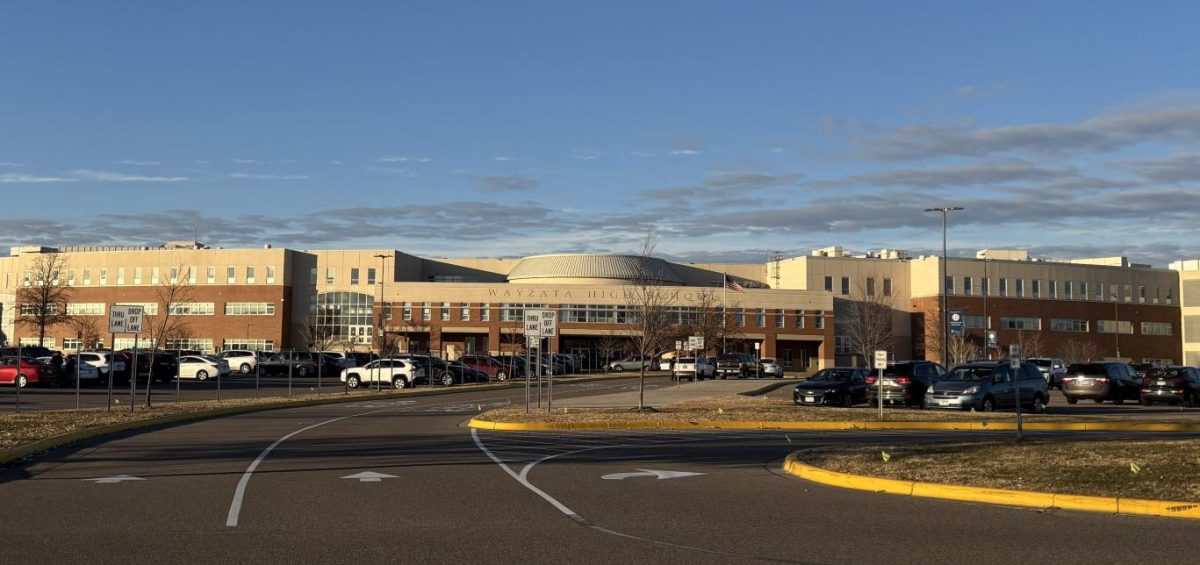




As you walk through our school’s parking lot, you may have noticed some of the local wildlife living around the building. Over the years, there have been many reports of animals spotted somewhere close proximity to our campus, including squirrels, chipmunks, sparrows, blue jays, and even the occasional wood duck or bald eagle. However, no other avian, let alone animal, thrives nearly as much in this area than our own flock of common rock pigeons.
Sophomore Mady Schmidt has been taking notes on the pigeons at our school since freshman year and has allowed me to share them. Here are a few notable facts abridged from Schmidt’s notes.
The first thing to note is that there were actually two flocks since the beginning of 2024. However, sometime during the winter, the two flocks separated, and only one remained at the school. Later, in early 2025, both flocks combined and formed one large group. There are currently still two different pigeon families living in our school, and it grows larger each day. Unfortunately, since the food chain is real, as we learned about in tenth grade biology, some of our pigeons have been taken out for numerous reasons.
Notably, in the early fall of 2024, a red-tailed hawk settled down in the woods out back. It proceeded to feed off the woodland population, leave a dead pigeon on the lawn, and poop on the giant window in the lunch room. Resident birdwatcher Ms. Kottke also added that she “saw a turkey vulture eat a dead pigeon in five minutes” while teaching a class on the fourth floor.
Ms. Kottke also shared information about the pigeons’ behavior, “In the spring, you see lots of pigeon mating behavior. The males puff up and follow females; the females will group together and act quite coy.”
When asked about the other seasons, she said, “In the fall, they will group together; In the winter, they will crowd together, and they always try to be in a group.”
Ms. Kottke also revealed some secrets about pigeon social life. She noticed that you’re able to easily tell which pigeons are getting picked on by the rest of the flock, as they will often be scared away from their perches by other pigeons. You can also find which ones are the dominant pigeons by seeing if other pigeons group around them. She added that, “they get to keep their spot while the others shuffle around, similar to 9th grade boys”.
While these pigeons are certainly interesting and fun to look at, they are, in fact, dumb; especially when it comes to their nest placement. Most likely, if you take the bus, you’ll see pigeon nests in the drainpipes of the school. While they don’t cause too much harm, heavy rain often destroys these nests. Custodian Kirk DeCamp usually has to clean up the dismantled nests after big storms. Ironically, the pigeons “are using the pipes for shelter, which is the main reason for nesting there,” as DeCamp noticed while working on school grounds. While these nests might be ideal for a few months, they’ll still get destroyed in due time.
These pigeons have also been here for a long time, originally opting for nesting inside the bleachers by the football field.
”The bleachers needed fences installed to block the areas under the bleachers where they would nest. I believed (they lived) twenty plus years at the bleachers and fifteen or so years in the pipes,” Recalls DeCamp. Since their original roost became inaccessible, they now live in the drainpipes, that they consider their home.
The history and behavior of our pigeons is certainly an interesting one, and the story is ongoing. From providing food for the local wildlife, to giving entertainment to teachers and students alike, our pigeons have unknowingly become the unofficial mascots of the school. So next time you walk around our school, pay attention to our feathery friends, you might have a story to tell later!